 Mexico architecture firm designed the Casa Parque Humano en el Bosque (House in the Forest) in Valle de Bravo, Mexico. The house is located in Valle de Bravo, Estado de Mexico, Mexico (19 11′33 ° “N 100 ° 07′50″ O), the weather ranges from 33 ° C to -2 ° C. Plot Avándaro faces Lake and protected forest area of Cerro Gordo, rich pine and oak trees. Program: Living, dining, kitchen and multipurpose rm, two bedrooms, a gazebo and a swimming pool. Two pavilions, unequal in size, was set in front of the swimming pool. The first and largest contains the living and dining room, kitchen and a working studio. The second one: two bedrooms. Each pavilion with carefully placed on the site, incorporating all the existing trees into the program and face view of the most important. This house is rooted in the existing landscape.
 After arriving, visitors find some of the experience: the steep cliffs, flora, house, pool of reflection. Visitors received under the protection of a steel cage, which is entered through a small door that leads into the living room, so that emphasize the contrast between the closed nature of the entrance and living room and full disclosure of the valley itself. Continuity between the landscape and the building is emphasized by structural glass window systems, beyond the conventional distinction between inside and outside. As a result, all the spaces are in direct and intimate contact with nature. The play of light and shadow in this window echoes the abstracted trees cast shadows in the courtyard of the monastery in the Desierto de los leones, located near Mexico City.
 Cladding growing home and to enter into the context of the city. A veneer of clay artisanal specifically developed for the project, similar in texture to traditional homes that you notice in the area. Reaction To The weather is causing an ever-changing material in response to various levels of humidity. The house was occupied natural ledge on the hillside, overlooking the views to the south and turn to the wind coming from the north. Land drops far below the floor, emphasizing the slope of the land and thus dramatize the progress of the house through the site. Houses that arouses a sense of floating above the park, show a sense of contact with nature.


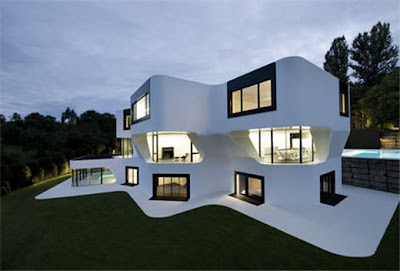 It is a rare building design that manages to appear at once contextual and completely alienated from its surroundings. The curves of this unique house by J. Mayer H. Architects bleed out from its edges and flow into the landscape around it, yet the division of artificial and natural remains quite clear save for the ambiguous boundary of the landscaped yard.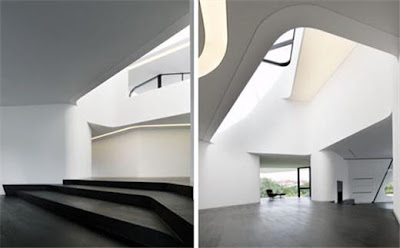
 The attention to volume, curves and fluidity extends from the exterior of the house to its interior spaces that seem carved out of a single solid substance and morph from one room into the next like a series of caverns. The shell of the structure is pierced by likewise curved openings that frame incredible views of the adjacent and distant natural and residential areas.
 Moving back to the outside, it is clear that there is an overall logic and rhythm governing the structure as it relates to the land on which it sits – namely, that it pushes out in all directions and moves both with and against the hill it rests on. The real accomplishment of this house design lies not in its purely aesthetic qualities but in the complex ways in which it relates to its environment and seeks a balance between being on independent object building and part of its site and surroundings.


